Swing your phone: golf swing practice with no club
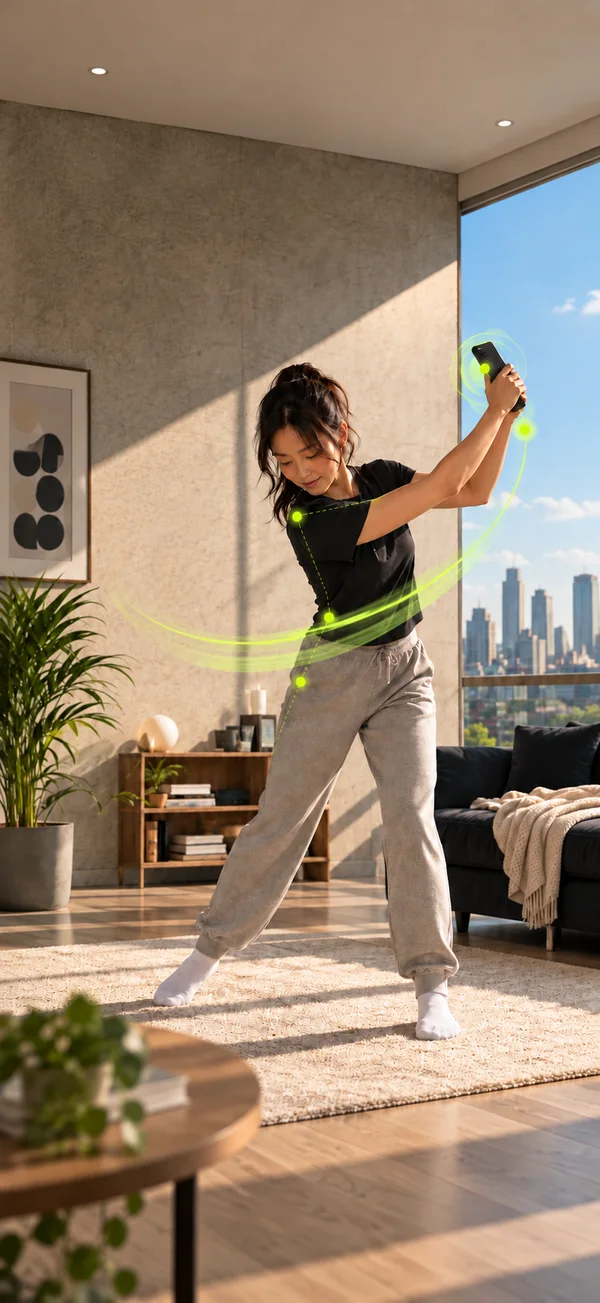
Swing your phone: hold your iPhone like a grip and make a real swing. That is the whole idea behind Rakou, and it turns golf swing practice into something you can do in an apartment, a hotel room or a garage in January. The phone is the club. This is what it can honestly read from your hands, what it cannot, and how to make golf practice at home count.
Why swing your phone at all?
Most golf swing practice needs gear and room: a club, a ball, a net, a ceiling high enough to take a backswing. Take those away and most golfers do nothing, which is how a swing goes stale between range days.
A phone is something you already carry, it has motion sensors that are far better than they need to be for this, and it fits in your hands the way a grip does. Hold it in both hands, make a real swing, and the sensors read what your hands did. No club is swung, no ball is struck, and nothing in the room is at risk if you do it sensibly.
It will not replace the range. It fills the days in between, which is where short, frequent practice does its work.
What a phone in your hands actually measures
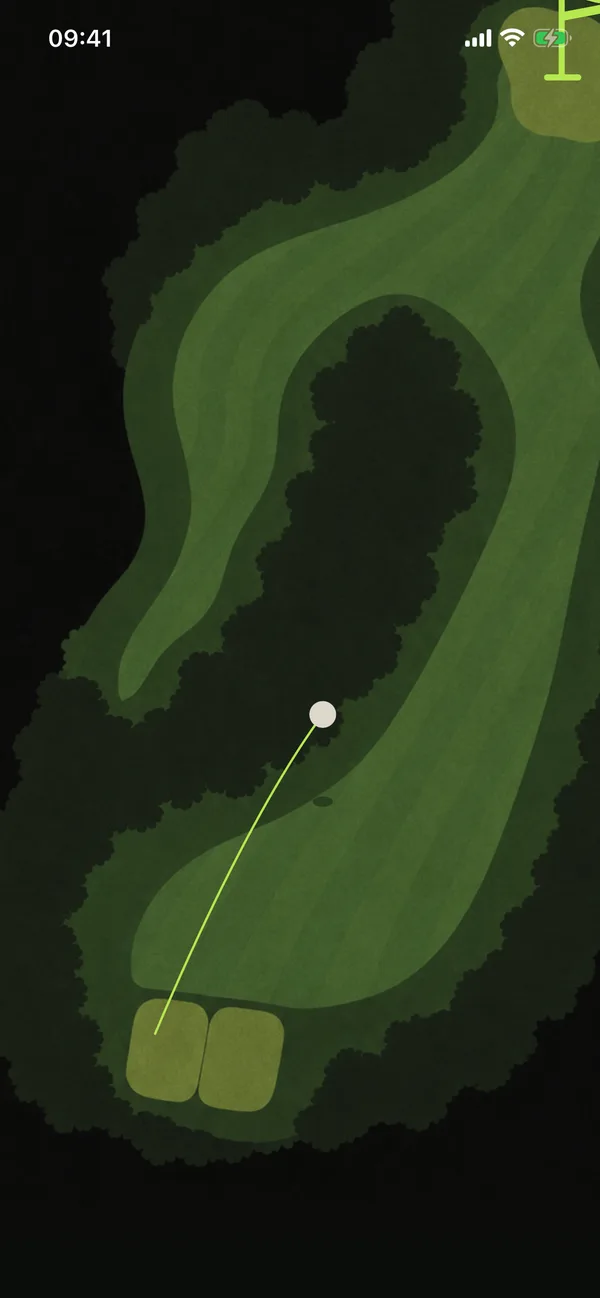
On a full swing, Rakou reads three things, and the first two decide what the ball does.
- Where the phone's face pointed at impact.In Rakou the phone is the club, so the direction its face points as it comes through is a real measurement. That decides where the ball starts and which way it curves. It is the phone's face, not your clubface: a real club is never measured.
- How fast your hands moved, against your own usual swing. It shows up as a percentage, like 92% of your usual. That is what decides distance. It is never miles per hour and never clubhead speed, because a phone in your hands cannot know either.
- Your tempo. The ratio of backswing to downswing, with about three to one as the target.
Very fast swings can go beyond what the phone's gyroscope can read. When that happens, Rakou says so instead of guessing at a number.
What it cannot measure, and why that is fine
Swing path is not measured. A phone in your hands cannot tell whether the club would have come from inside or outside the line, so Rakou does not pretend to know.
The ball is not real either. The ball is simulated. What moves it is measured. Your face, your hand speed and your tempo are real readings from your real swing, and they are what the game uses to decide the shot. That split is deliberate: measure what the hardware can know, and be plain about the rest.
For the same reason, none of this tells you what your real driver does. For that you need a range and a ball. What a phone swing trains is the part that comes before the strike: how steady your rhythm is, how consistent your speed is, and where the face is pointing as you arrive.
How to make reps that count
A swing with no feedback is rehearsal of whatever you already do, which is why most practice at home without clubs goes nowhere. Here is how to give each rep a purpose.
- Pick one thing per session. Tempo, or the face, or speed. Not all three at once.
- Swing at a speed you can repeat. A swing you could make ten times in a row teaches more than one you can make once.
- Read the result, then change one thing. If the face came through open, do not rebuild your swing. Change one small thing and swing again.
- Keep a firm hold. Use a case, grip it properly, and keep people and breakables out of your arc.
Putting is a different move
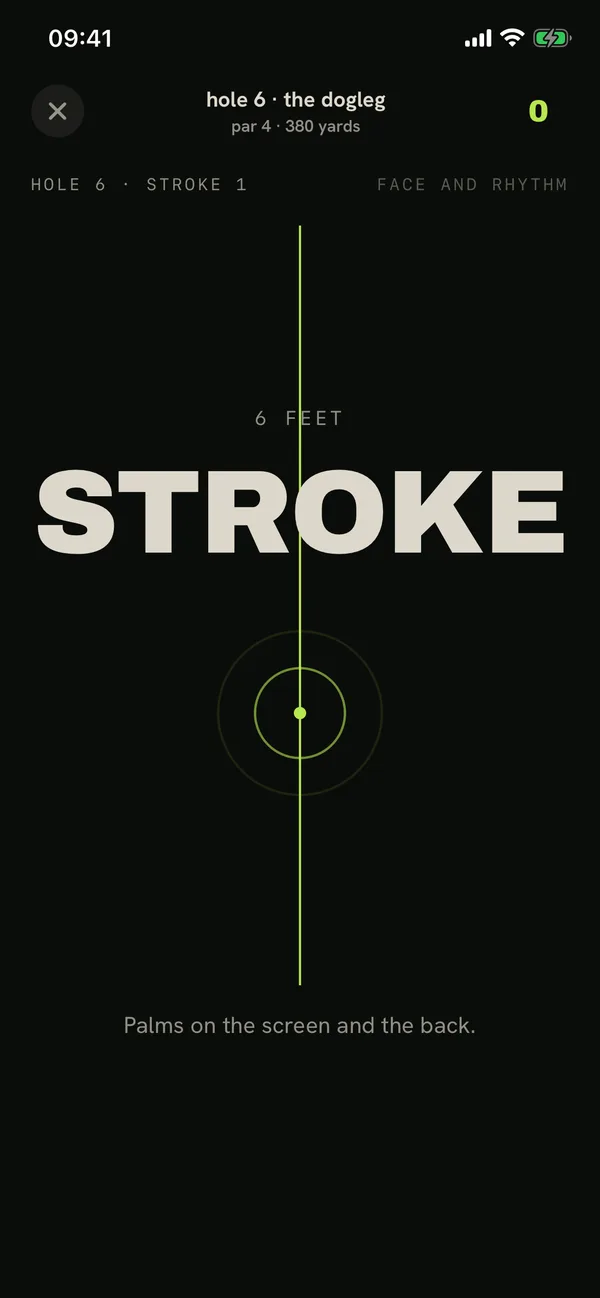
A putt is not a small swing, so it does not use one. For putts you hold the phone flat between your two palms, one on the screen and one on the back. A 3-2-1 count runs, and then you putt.
Rakou reads your rhythm and where the phone's face pointed at impact. How far the ball rolls is modeled from how hard you moved the phone, so treat the distance as a good estimate and the face and rhythm as the readings that matter.
A ten-minute routine
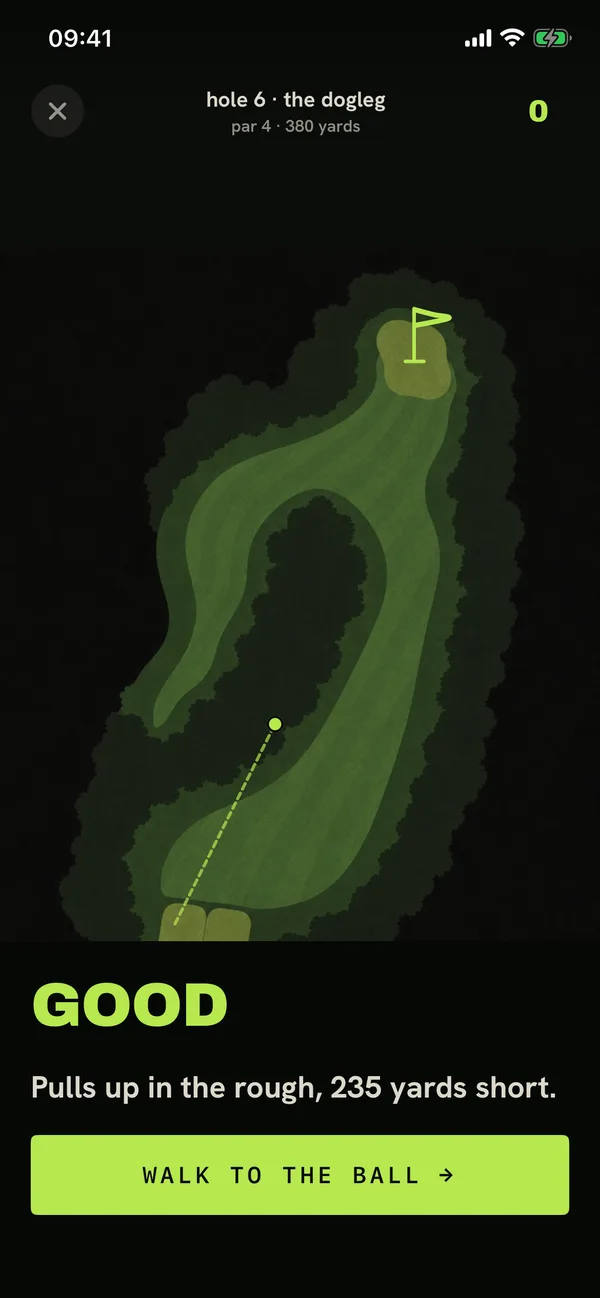
Rakou is built from 18 holes, called Rakou National. Each one is built around a decision golfers get wrong, and a hole takes about ten minutes. You pick a club, swing, watch the ball fly across the hole, walk to it and play the next shot. Clear a hole and the next one opens. Here is the shape of a session:
- Clear a patch of floor and take a case-protected phone in both hands, like a grip.
- Make two or three slow swings to find your rhythm. Aim for a backswing about three times as long as the downswing.
- Open a hole. Pick a club for the shot in front of you and make a real swing.
- Read the result. Change one thing and swing again on the next shot. Do not chase every number.
- Finish the hole, then stop. Stopping while it still feels easy is how you come back tomorrow.
Who this suits
- Apartment dwellers. No ceiling to hit, no neighbor to disturb, and the arc is small.
- Travelers. A hotel room has the floor space you need and the phone is already in your pocket.
- Winter golfers. When the course is shut, a daily rep is how a swing survives. More in winter golf practice.
- Beginners nervous about a range. Build a swing in private first, so your first bucket of balls is not also your first swing.
If you want a reading of your body as well as your hands, Rakou can also read a swing you film. That is a separate tool for a different question.
The short version
Holding a phone like a grip and swinging it gives you golf swing practice with a reading attached: where the face pointed, how fast your hands moved against your own usual swing, and your tempo. The path and the ball are not measured, and the app says so. Use it for ten minutes most days, change one thing at a time, and keep the range for the strike.
Common questions
- Can you really practice a golf swing with just a phone?
- Yes, for the movement. Holding the phone like a grip and making a real swing trains your rhythm, your speed and where the phone's face points at impact, and none of that needs a club or a ball. What it cannot train is the strike itself: contact and distance on a real ball still need a range.
- What does a phone measure when you swing it?
- On a full swing it reads where the phone's face pointed at impact, how fast your hands moved compared with your own usual swing, and the ratio of your backswing to your downswing. It does not measure swing path, clubhead speed or ball speed, and it says so when a swing is too fast for its sensors to read fully.
- Is swinging a phone safe?
- It is if you treat it like any loose object in a moving hand. Use a case, keep a firm grip, clear the space around you of people, screens and breakables, and start with slow swings. Make the first few at half speed until you trust your hold.
- How much space do you need for golf swing practice at home?
- Enough to swing your arms without touching anything. Because there is no club, that is far less than a real swing needs: a clear patch of floor about the width of your arm span, and head room for your hands at the top.
- Is a phone swing as good as practicing with a real club?
- No, and it is not trying to be. A real club gives you a real strike. A phone gives you a way to make real swings on days when a club is not an option, with a reading attached to each one. Used between range days, it keeps the movement fresh.

Swing your phone tonight
Hold it like a grip, swing, and watch the ball fly. No club, no ball, no net.